Bringing Digital Whimsy to Life: The Rise of the Kawaii Cat Figure 3D Print Model
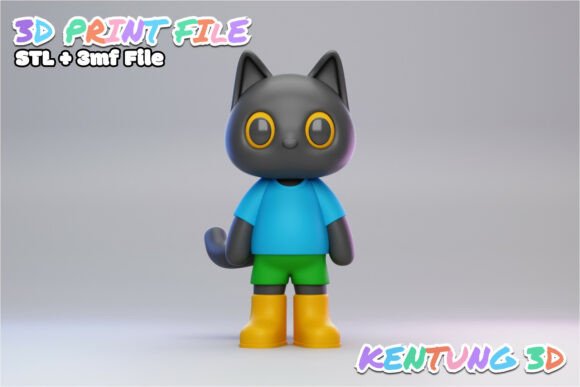
In the rapidly evolving landscape of digital fabrication, few trends have captured the collective imagination quite like the intersection of pop culture aesthetics and additive manufacturing. At the forefront of this movement is the Kawaii Cat Figure 3D Print Model, a design that transcends simple utility to become a statement piece for creators, entrepreneurs, and hobbyists alike. This stylized representation of feline charm is not merely a file format; it is a testament to how modern technology empowers individuals to curate their physical environments with bespoke, high-quality art.
For professionals in the creative sector, from freelance designers to small business owners, understanding the mechanics and market potential of such models is essential. The shift from mass-produced plastic trinkets to personalized, home-printed collectibles represents a fundamental change in consumer behavior. People are no longer satisfied with generic store-bought items; they crave uniqueness, narrative, and the tactile satisfaction of creation. The Kawaii Cat Figure 3D Print Model sits perfectly at this crossroads, offering a streamlined workflow that balances aesthetic appeal with technical feasibility.
The Evolution of Personalized Collectibles
The popularity of kawaii culture—a Japanese term meaning "cute" or "adorable"—has permeated global markets, influencing everything from fashion to interior design. However, the traditional supply chain for these items often involves long shipping times, high costs, and limited customization. Enter the world of 3D printing. By leveraging a Kawaii Cat Figure 3D Print Model, enthusiasts can bypass these logistical hurdles. The ability to produce a 10 cm tall, highly detailed figurine on demand changes the economics of collecting.
This model is specifically engineered to meet the demands of the modern maker. Unlike complex, monolithic designs that require extensive support structures and post-processing, this character is thoughtfully split into multiple parts: head, body, legs, and tail. This modular approach is a significant innovation in user experience. It ensures easier printing, enhances detail quality by allowing optimal orientation for each component, and drastically reduces the need for supports. For the professional creator, this means less wasted material, lower failure rates, and a cleaner final product that requires minimal sanding or finishing.
Design Philosophy: Minimalism Meets Character
What makes this specific model stand out in a crowded marketplace is its adherence to clean topology and smooth surfaces. In the realm of 3D modeling, "clean" does not just mean visually appealing; it implies structural integrity and printability. The stylized nature of the cat avoids overly thin features that might snap during removal or fail to print correctly on standard FDM printers. Instead, it embraces a rounded, soft aesthetic that aligns perfectly with the kawaii genre while remaining robust enough for everyday handling.
For collectors and desk decorators, the result is a charming object that adds a touch of personality to any workspace. Whether placed on a corporate desk to soften the atmosphere or displayed as part of a curated collection, the figure serves as a conversation starter. It reflects a broader trend where consumers value objects that tell a story—specifically, the story of their own making. The process of printing each part separately and assembling them with glue transforms the consumer into a co-creator, adding emotional value to the final artifact.
Technical Excellence and Workflow Optimization
From a technical standpoint, the Kawaii Cat Figure 3D Print Model demonstrates best practices in file preparation and printer compatibility. Tested successfully on the Bambu Lab A1 Mini using Sunlu PLA, the model has been optimized for reliability. The recommended settings include a 0.16 mm layer height, three wall loops, and a 10% infill density. These parameters strike a delicate balance between print speed, material usage, and structural strength.
For entrepreneurs looking to scale production or freelancers fulfilling custom orders, consistency is key. The use of standard materials like PLA ensures that the color palette is virtually limitless, allowing for customization based on client preferences. Furthermore, the optional brim feature provides better bed adhesion, a critical factor when printing small, intricate parts that might otherwise warp or detach during the early layers of printing.
The requirement for assembly via glue might seem counterintuitive to some seeking a "print-and-play" solution, but it is actually a strategic advantage. Printing parts separately allows each section to be oriented in the most efficient manner on the build plate. The head can be printed upright for facial symmetry, while the legs can be laid flat to ensure stability without supports. This methodological approach results in superior surface quality on all sides of the figurine, eliminating the z-axis lines that often mar single-piece prints.
Accessibility for Beginners and Pros Alike
One of the most compelling aspects of this model is its accessibility. The 3D printing industry has historically had a steep learning curve, deterring many potential users. However, designs like this Kawaii Cat Figure 3D Print Model are crafted with the beginner in mind. The clear segmentation of parts simplifies the slicing process, and the lack of complex overhangs minimizes the risk of print failures. This democratization of design allows new makers to achieve professional-looking results with minimal frustration.
Conversely, experienced makers will appreciate the efficiency gains. The reduced need for supports translates to faster print times and less time spent on post-processing. In a professional context, where time is money, these efficiencies allow for higher throughput. A freelancer can print multiple batches simultaneously, assemble them quickly, and deliver a polished product to clients. This scalability makes the model an attractive asset for those running small e-commerce stores focused on niche collectibles.
Market Trends and Consumer Expectations
The surge in interest around the Kawaii Cat Figure 3D Print Model is indicative of larger shifts in consumer expectations. Today's buyers are increasingly aware of the environmental impact of mass production. By choosing to 3D print locally, they reduce carbon footprints associated with shipping and minimize packaging waste. Additionally, the ability to repair or replace individual broken parts (such as a snapped leg) extends the lifespan of the product, aligning with the principles of a circular economy.
Furthermore, the rise of remote work and the "desk setup" culture has fueled demand for unique decor. Professionals working from home are curating their spaces to reflect their personalities and boost morale. A cute, hand-assembled cat figurine serves as a perfect antidote to the sterile environment of digital screens. It offers a tangible reminder of creativity and playfulness, which are essential components of mental well-being in high-stress industries.
For marketers and business owners, this trend presents a unique opportunity. Selling digital files alongside physical examples creates a dual-revenue stream. Educating customers on the ease of assembly and the quality of the print encourages engagement and builds a community around the brand. The Kawaii Cat Figure 3D Print Model is not just a product; it is an entry point into a lifestyle of creation and personalization.
Future-Proofing Your Creative Toolkit
As 3D printing technology continues to advance, becoming faster, more affordable, and more precise, the value of well-designed models will only increase. The principles embedded in this cat figure—modularity, clean topology, and material efficiency—are forward-looking strategies that will remain relevant regardless of hardware upgrades. Whether you are using a desktop FDM printer today or a high-end industrial machine tomorrow, the logic of splitting complex geometries into manageable parts remains sound.
Moreover, the versatility of the STL and 3MF file formats ensures compatibility with a wide range of software and hardware ecosystems. This interoperability is crucial for professionals who may switch between different slicers or printer brands. By investing in high-quality, versatile models, creators future-proof their workflows and maintain flexibility in their production capabilities.
Conclusion: A Symbol of Modern Creativity
The Kawaii Cat Figure 3D Print Model represents more than just a cute animal; it embodies the spirit of the modern maker. It bridges the gap between digital design and physical reality, offering a seamless experience for both novices and veterans. Its thoughtful construction, optimized for easy printing and assembly, addresses the practical needs of today's creators while satisfying the emotional desire for unique, personalized objects.
Whether you are a collector seeking to expand your shelf with a one-of-a-kind piece, a business owner exploring new product lines, or an enthusiast eager to refine your printing skills, this model offers a rewarding journey. It invites you to engage with the technology, to understand the nuances of layer heights and infill densities, and to take pride in the final assembly. In a world dominated by mass production, the act of creating something beautiful by hand—or by machine guided by hand—is a powerful statement. As we move forward, models like this will continue to shape the way we interact with our physical world, turning the ordinary into the extraordinary, one slice at a time.