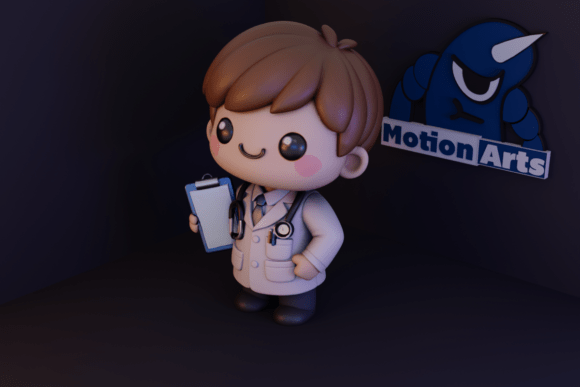
Cartoon Doctor 3D Model for Printing: A Practical Evaluation
The landscape of downloadable 3D assets has expanded significantly, offering everything from hyper-realistic anatomical figures to abstract geometric sculptures. Within this vast ecosystem, the Cartoon Doctor 3D Model for Printing occupies a specific and valuable niche. Designed as a stylized toy-art figure, this model prioritizes approachability and print reliability over photorealism. For hobbyists, educators, and small business owners looking to add medical-themed decor or create personalized gifts, understanding the distinct characteristics of this file is essential before committing printer time and material.
This evaluation examines the design philosophy behind the Cartoon Doctor 3D Model for Printing, compares it against other common modeling styles, and outlines the scenarios where it serves as the optimal choice versus when alternative resources might be more appropriate.
Design Philosophy and Structural Integrity
The primary differentiator of the Cartoon Doctor 3D Model for Printing is its intentional simplification of geometry. Unlike many digital assets that focus on intricate surface details which can compromise structural integrity during the additive manufacturing process, this model embraces "toy art" aesthetics. The character features an exaggerated head-to-body ratio, smooth surfaces, and integrated accessories such as a clipboard and stethoscope.
From a technical standpoint, this design approach addresses two common pain points in FDM (Fused Deposition Modeling) printing: support structures and thin wall failures. By ensuring closed volumes and avoiding overly delicate protrusions, the model minimizes the need for extensive support material. This is a critical factor for beginners who may struggle with post-print cleanup or for users seeking to reduce filament waste. The single-piece construction means the figure prints as one solid unit, eliminating the complexity of assembling multiple parts after the job is complete.
The emphasis on stability is equally important. The base of the model is engineered to provide a wide footprint, ensuring adhesion to the print bed without warping—a frequent issue with tall, narrow figurines. When evaluating 3D models, the balance between visual appeal and mechanical feasibility often dictates success; the Cartoon Doctor 3D Model for Printing leans heavily toward feasibility without sacrificing charm.
Comparing Stylized vs. Realistic Medical Models
When selecting a 3D asset for a medical theme, users typically face a choice between realistic anatomical representations and stylized character designs. Each category serves a fundamentally different purpose and requires different printing strategies.
Realistic Anatomical Models: These are often used for educational demonstrations or professional displays. They require high-resolution printers, fine nozzles, and significant support structures to capture veins, muscles, or facial expressions accurately. Post-processing usually involves sanding, priming, and painting to achieve a lifelike finish. While impressive, these models are prone to failure if the printer settings are not perfectly calibrated.
Stylized Toy Art (The Cartoon Doctor Approach): In contrast, the Cartoon Doctor 3D Model for Printing sacrifices anatomical accuracy for robustness and friendliness. The softened details and thickened lines make it forgiving of minor layer misalignments or nozzle inconsistencies. This makes it a superior choice for standard home printers using PLA filament. If the goal is to create a shelf ornament, a desk toy, or a child-friendly educational aid, the stylized approach offers a higher success rate and a lower barrier to entry.
For users comparing options, the decision often comes down to the intended audience. A medical student might prefer a realistic heart model, whereas a pediatric clinic or a young enthusiast would find the cartoon doctor far more engaging and less intimidating.
Material Considerations and Print Settings
The versatility of the Cartoon Doctor 3D Model for Printing extends to material selection. While the design is optimized for PLA (Polylactic Acid), its simple geometry allows for experimentation with other filaments without risking structural collapse. PLA remains the recommended choice due to its ease of use, low warping potential, and wide color variety, which aligns well with the colorful nature of cartoon characters.
However, the model's lack of extreme overhangs also opens the door for PETG or even TPU (flexible filament) for users seeking durability. For instance, a clinic might choose PETG for a reception desk display that needs to withstand occasional bumps, while a parent might opt for TPU to create a soft, squeezable toy for a child. It is worth noting that while flexible filaments offer tactile benefits, they require slower print speeds and specific tension adjustments, adding a layer of complexity that contradicts the "beginner-friendly" ethos of the original design.
Regarding slicer settings, the model generally requires minimal or no supports, depending on the specific orientation chosen by the user. This reduces print time and material consumption. Users should still consider brims or rafts if their print bed adhesion is inconsistent, but the model's flat, stable base usually mitigates this need.
Use Cases and Functional Applications
The utility of the Cartoon Doctor 3D Model for Printing spans several practical applications, each leveraging its unique blend of professionalism and playfulness.
- Clinic and Office Decoration: Pediatric offices and family practice waiting rooms often benefit from decor that feels welcoming rather than sterile. This model serves as an excellent focal point, reinforcing a friendly brand identity.
- Educational Tools: Teachers and parents can use the figure to introduce healthcare concepts to children. The simplified features make it easier for kids to identify roles and tools like the stethoscope and clipboard without being overwhelmed by complex anatomy.
- Personalized Gifts: For individuals entering the medical field or celebrating a recovery, a hand-painted version of this figure offers a thoughtful, custom gift option. The smooth surfaces provided by the model make painting relatively straightforward, even for those with limited artistic experience.
- Collection Building: Hobbyists who enjoy curating themed miniatures will appreciate the consistent scale and style, allowing the Cartoon Doctor to fit seamlessly into larger collections of cartoon-style professionals.
Limitations and Decision Factors
While the Cartoon Doctor 3D Model for Printing excels in specific areas, it is not a universal solution. Potential users must weigh certain limitations before downloading the STL file.
Lack of Detail for Close Inspection: Because the design relies on smoothed-over forms, it does not hold up well under macro photography or close-up inspection. If the project requires visible textures like fabric weave on a coat or detailed facial pores, this model will fall short. In such cases, a high-poly sculpted model would be necessary, despite the increased printing difficulty.
Scale Constraints: The proportions of the character—specifically the large head—are designed for a specific aesthetic. Printing the model at extremely small scales may result in lost detail, while very large scales could highlight layer lines on the broad surfaces unless infill density and shell thickness are adjusted accordingly.
Static Pose: As a single-piece static figure, the model lacks articulation. Users cannot pose the arms or legs. If the application requires dynamic movement or interaction, this rigid design is unsuitable. Articulated figures require complex joint mechanisms that significantly increase the risk of print failure and assembly frustration.
Conclusion: Is This Model Right for You?
The Cartoon Doctor 3D Model for Printing represents a pragmatic solution for users who prioritize reliability and accessibility over photorealism. It is an ideal starting point for beginners learning the ropes of 3D printing, offering a high probability of success with standard equipment and materials. Its design philosophy ensures that the final object is stable, easy to finish, and visually appealing in a way that resonates with a broad audience.
However, for projects demanding high-fidelity anatomical accuracy, extreme detail, or articulated movement, other resources may be better suited. Ultimately, the value of this model lies in its ability to bridge the gap between digital design and physical reality without unnecessary friction. By choosing a design that respects the limitations of consumer-grade printers, users can focus on the creative aspects of coloring, displaying, and gifting, rather than troubleshooting print failures. For anyone looking to bring a friendly, professional touch to their 3D printing portfolio, this model offers a balanced and effective path forward.