Empowerment, You’ve Done Hard Things: A Strategic Tool for Resilience and Growth
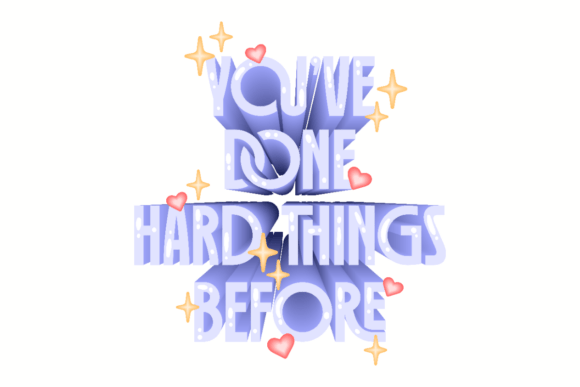
In the landscape of personal development and professional branding, the concept of Empowerment, You’ve Done Hard Things serves as more than a simple affirmation. It is a psychological anchor and a strategic asset designed to reframe past struggles into tangible evidence of capability. For entrepreneurs, creatives, and decision-makers navigating complex environments, this narrative shifts the focus from current obstacles to proven track records. The visual manifestation of this idea—often characterized by dynamic typography and symbolic elements like shimmering stars or protective hearts—acts as a constant, accessible reminder that resilience is not an abstract trait but a demonstrated history.
Understanding the utility of Empowerment, You’ve Done Hard Things requires looking beyond surface-level motivation. It is about leveraging cognitive reframing to improve decision-making under pressure. When you consciously recall specific instances where you overcame significant challenges, you activate a neural pathway associated with competence and problem-solving. This is particularly valuable for small business owners facing market volatility or freelancers managing client uncertainty. By integrating this mindset into your daily workflow, you transform anxiety into actionable confidence.
The Psychology of Proven Strength in Decision Making
Strategic success often hinges on the ability to remain calm and focused when outcomes are uncertain. The narrative of You’ve Done Hard Things Before functions as a cognitive intervention against the "imposter syndrome" that frequently plagues high-performing individuals. When a leader hesitates to make a critical call, it is often because they are fixated on potential failure rather than their historical capacity to navigate difficulty.
Consider the mechanics of this approach. When you visualize a design featuring bold, lavender-blue 3D typography or similar strong visual cues, you are engaging with a symbol of stability. This visual trigger can be strategically placed in high-stress environments, such as a workspace decal or a digital background during virtual meetings. The presence of these symbols reinforces the reality that you have survived previous crises. This is not merely feel-good rhetoric; it is a practical method for maintaining operational continuity during turbulent times.
For educators and professionals, this mindset supports better planning. If you know you have successfully managed difficult projects in the past, you are more likely to approach new, complex initiatives with a structured plan rather than reactive panic. The Empowerment, You’ve Done Hard Things philosophy encourages a retrospective analysis of your own career. By cataloging your victories, you build a reservoir of confidence that can be drawn upon when launching new ventures or scaling operations.
Integrating Visual Cues into Your Workflow
The effectiveness of this empowerment strategy is amplified when paired with intentional environmental design. Whether utilizing a digital download for a motivational journal or applying a vinyl decal to a laptop, the placement matters. These tools should not be decorative afterthoughts but strategic markers positioned at points of friction.
- Workspace Integration: Place reminders near your primary workstation. When you encounter a roadblock in project management, the visual cue prompts an immediate shift in perspective from "I can't solve this" to "I have solved hard things before."
- Digital Presence: Use these graphics in email signatures, social media headers, or presentation slides. This communicates to clients and stakeholders that your brand is built on resilience and reliability.
- Personal Rituals: Incorporate the message into morning routines or pre-meeting preparations. Reviewing a list of past achievements alongside the visual design primes the brain for proactive engagement.
The aesthetic choices involved—such as soft, rounded letters paired with playful red hearts and gold stars—are not arbitrary. They soften the harshness of struggle while celebrating the victory. This balance is crucial for long-term mental health. It acknowledges the difficulty without letting it define the entire narrative, allowing for a sustainable approach to high-performance work.
Strategic Applications for Entrepreneurs and Creators
For those building businesses or creative portfolios, the Empowerment, You’ve Done Hard Things narrative is a powerful branding tool. In a saturated market, authenticity resonates. Sharing the story of how you navigated a pivot, recovered from a failed launch, or managed a team through a crisis establishes trust. It positions you not just as a service provider, but as a resilient partner who can handle adversity.
This approach influences customer experience significantly. Clients are often looking for reassurance that their investment is safe. When your communication reflects a deep understanding of challenges and a proven ability to overcome them, it reduces perceived risk. You are signaling that you possess the grit required to deliver results even when the path is unclear.
Furthermore, this mindset aids in creativity and innovation. Fear of failure often stifles creative output. By reminding yourself that you have done hard things, you lower the stakes of experimentation. You become more willing to test new marketing strategies, explore different content formats, or invest in unproven technologies because you trust your ability to adapt if things do not go according to plan.
Operationalizing Resilience in Teams
Leaders can also apply this framework to team dynamics. Encouraging a culture where past victories are celebrated creates a collective sense of strength. When a team faces a deadline crunch or a technical setback, referencing shared history of overcoming odds can boost morale and productivity.
However, this must be handled with nuance. It is not about ignoring current problems but about contextualizing them within a broader timeline of success. Leaders should guide their teams to identify specific skills they used in the past that are applicable now. This transforms abstract encouragement into concrete problem-solving strategies.
Planning and Implementation: Avoiding Common Pitfalls
While the benefits of Empowerment, You’ve Done Hard Things are clear, relying on it without context can lead to complacency or blind optimism. There is a distinct difference between strategic confidence and dismissing valid risks. Using this narrative as a shield against necessary feedback or a reason to ignore data-driven warnings is a strategic error.
To use this tool effectively, you must pair the affirmation with rigorous analysis. Acknowledge that while you have done hard things, every situation presents unique variables. The goal is to access the capacity to handle difficulty, not to assume that past solutions will automatically work for future problems.
Before implementing this mindset into your daily routine or brand messaging, consider the following:
- Define Your "Hard Things": Be specific. Vague references to "struggles" lack impact. Identify concrete examples of challenges you have navigated successfully.
- Align with Current Goals: Ensure the narrative supports your immediate objectives. If you are in a phase of rapid growth, focus on the resilience required to scale. If you are pivoting, highlight the adaptability shown in past transitions.
- Balance Celebration with Preparation: Celebrate the win, but immediately channel that energy into planning for the next step. Confidence should fuel action, not replace it.
Risks arise when the message becomes performative rather than internalized. If you display the graphic or share the story without the underlying discipline to back it up, it can erode credibility. Authenticity is key. The audience must see the genuine reflection of your journey, not just a polished image.
Long-Term Value and Sustainable Growth
The true power of Empowerment, You’ve Done Hard Things lies in its long-term application. Over years of entrepreneurship or creative work, burnout is a significant threat. Maintaining a repository of your own resilience helps sustain momentum. It provides a reference point during inevitable downturns, reminding you that low points are temporary and manageable.
This perspective fosters a growth mindset that is essential for continuous learning. When you view challenges as opportunities to add to your list of "hard things," you become more open to feedback and skill acquisition. You stop fearing the unknown and start anticipating the growth that comes from navigating it.
For publishers, bloggers, and content creators, this theme offers rich material for storytelling. Audiences connect deeply with vulnerability and triumph. By sharing your journey of overcoming obstacles, you build a loyal community that values your authenticity. This connection translates into better engagement, higher retention, and stronger brand loyalty.
Final Thoughts on Intentional Empowerment
Ultimately, the decision to embrace the Empowerment, You’ve Done Hard Things narrative is a strategic choice to optimize your mental and operational resources. It is about recognizing that your history is a blueprint for your future. Whether through a high-resolution PNG file for your digital assets or an SVG cut file for physical merchandise, the medium is secondary to the message.
Use this tool intentionally. Let it inform your planning, strengthen your positioning, and clarify your communication. By grounding your confidence in proven strength, you create a foundation for making better decisions and achieving superior results. In a world that often emphasizes the struggle, choosing to highlight the victory is a bold, effective strategy for anyone serious about long-term success.