Smartphone Tap Screen Gesture 3D Icon: A Practical Asset for Modern Design Workflows
In the fast-paced environment of digital product development, visual clarity is not merely an aesthetic choice; it is a functional necessity. Professionals ranging from UI/UX designers to marketing managers constantly seek assets that communicate complex interactions instantly. The Smartphone Tap Screen Gesture 3D Icon serves as a critical component in this ecosystem. It is more than a decorative graphic; it is a precise visual cue designed to represent touchscreen interaction and user engagement with immediate recognition. By integrating this specific asset into your projects, you streamline the communication of how users should interact with digital interfaces, ensuring that tutorials, presentations, and applications convey their intended message without ambiguity.
The Role of Visual Assets in User Engagement Strategies
When planning a digital project, whether it is launching a new mobile application or creating an educational module on technology usage, the selection of visual elements dictates the pace at which information is absorbed. The Smartphone Tap Screen Gesture 3D Icon fits directly into the phase where abstract concepts must be translated into concrete actions. In the context of UI/UX design, the "tap" gesture is fundamental. However, illustrating this action effectively requires a representation that feels tactile and modern. Flat icons often lack the depth required to suggest physical interaction, whereas a high-quality 3D rendering provides the necessary visual weight to simulate the sensation of pressing a screen.
This asset is engineered to bridge the gap between the physical world and the digital interface. For entrepreneurs and small business owners presenting a pitch deck, using a generic flat icon might dilute the perceived sophistication of a product. Conversely, a custom 3D model created from scratch consumes valuable time and resources. The pre-designed Smartphone Tap Screen Gesture 3D Icon offers a middle ground: professional-grade quality that aligns with current design trends while maintaining efficiency. It allows teams to focus on strategy and content rather than getting bogged down in the minutiae of rendering shadows and lighting effects.
Integration Across Different Project Stages
The versatility of this icon extends across various stages of a project lifecycle, from initial concepting to final deployment. Understanding where to deploy this asset can significantly enhance the overall output of your workflow.
Pre-Production and Planning
Before a single line of code is written or a slide is finalized, the planning phase involves wireframing and storyboarding. During this stage, stakeholders need to visualize the user journey. Incorporating the Smartphone Tap Screen Gesture 3D Icon into early mockups helps establish the tone of the interaction. It signals to developers and clients that the focus is on intuitive, touch-based navigation. This early integration ensures that everyone involved shares a unified vision of the user experience, reducing the likelihood of miscommunication during the execution phase.
Execution and Development
As the project moves into the active creation phase, the need for consistent visual language becomes paramount. For app tutorials and onboarding screens, this icon acts as a direct instructional tool. When a user sees the 3D hand tapping the screen, the cognitive load required to understand the instruction drops significantly. Unlike text-heavy explanations, which can be skipped or misunderstood, the visual metaphor of the tap is universally understood. This is particularly useful for educational materials and technology presentations where the audience may have varying levels of technical proficiency.
Post-Launch and Marketing
Once a product is live, the focus shifts to marketing and user retention. Websites and promotional materials often require dynamic visuals to capture attention. The Smartphone Tap Screen Gesture 3D Icon performs exceptionally well in these contexts because its three-dimensional nature stands out against standard web layouts. It draws the eye and reinforces the call to action, whether that is downloading an app, signing up for a service, or engaging with interactive content. Its high resolution ensures it remains crisp across all devices, from desktop monitors to mobile screens, maintaining brand integrity throughout the user's journey.
Technical Specifications and Workflow Compatibility
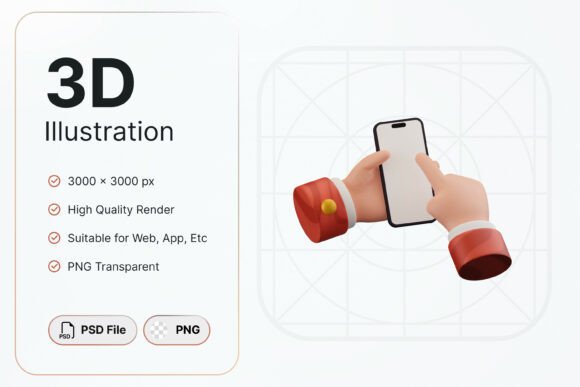
For professionals who manage multiple assets and tight deadlines, technical compatibility is non-negotiable. The Smartphone Tap Screen Gesture 3D Icon is delivered as a ready-to-use solution, eliminating the need for extensive post-processing. The asset comes in two primary formats: a PNG file with a transparent background and a PSD file for those requiring layer access within Adobe Photoshop.
The inclusion of a transparent background is a crucial feature for seamless integration. Designers can place the icon over any color scheme, texture, or photographic background without worrying about awkward white boxes or clipping paths. This flexibility allows the asset to adapt to diverse brand identities. Whether the project requires a minimalist white theme or a bold, dark-mode interface, the icon integrates smoothly without requiring additional masking work.
Furthermore, the resolution of 3000×3000 pixels ensures that the asset is future-proof. High-resolution files are essential for print materials, large-format presentations, and high-DPI displays common in modern smartphones and tablets. Using lower-resolution graphics can lead to pixelation and a loss of professional credibility. With this level of detail, the 3D textures and lighting effects remain sharp even when zoomed in, allowing for close-up shots in detailed tutorials or high-definition video overlays.
Workflow Efficiency and Quality Control
Efficiency in a creative workflow is often measured by the reduction of friction points. Custom 3D modeling is time-intensive and requires specialized skills. By utilizing a pre-rendered asset like the Smartphone Tap Screen Gesture 3D Icon, teams can bypass the rendering queue and move immediately to layout and composition. This shift allows freelancers and agencies to take on more projects or deliver results faster without compromising on visual quality.
However, it is important to note the limitations regarding customization. All assets cannot be changed in color and shape. This constraint is intentional; the asset is optimized to maintain its specific lighting, shading, and geometric integrity. Attempting to alter these core properties can degrade the visual fidelity, resulting in a flattened or distorted appearance that defeats the purpose of using a 3D element. Therefore, the workflow should involve selecting this icon as a fixed element within the design system rather than a malleable object. Designers should plan their color palettes and compositions around the existing look of the icon to ensure harmony.
Strategic Implementation Tips
To maximize the impact of the Smartphone Tap Screen Gesture 3D Icon, consider the following practical implementation strategies:
- Maintain Consistency: Use the icon consistently across all touchpoints. If it appears in the app tutorial, it should also appear in the marketing website and social media ads. This repetition builds familiarity and reinforces the user's mental model of the interaction.
- Leverage Depth Cues: Since the icon is 3D, use it to create a sense of depth in otherwise flat designs. Placing it slightly above other UI elements can suggest hierarchy and interactivity, guiding the user's eye to the most important parts of the screen.
- Optimize File Management: Keep both the PNG and PSD versions organized in your asset library. Use the PNG for quick web deployments and the PSD if you need to isolate specific layers for complex compositing tasks, such as adding custom drop shadows or blending modes that match a specific background.
- Contextual Placement: Ensure the icon is placed near the relevant interactive element. In a tutorial, position it directly adjacent to the button being tapped. In a presentation, use it to highlight key features of the software being discussed.
Long-Term Value and Scalability
Investing in high-quality, standardized assets like the Smartphone Tap Screen Gesture 3D Icon provides long-term value beyond a single project. As digital products evolve, the need for clear, recognizable symbols remains constant. This icon represents a universal action that will likely remain relevant for years to come. By establishing a library of such reliable assets, organizations can reduce the time spent searching for or creating new graphics for every minor update.
Moreover, the scalability of the 3000×3000 px resolution means the asset can serve multiple purposes simultaneously. It can be used for a tiny favicon, a medium-sized button in an app, or a massive hero image on a landing page. This versatility reduces the need for multiple variations of the same graphic, simplifying asset management and version control. For educators and content creators, this means less time managing files and more time focusing on the substance of the lesson or the narrative of the presentation.
In conclusion, the Smartphone Tap Screen Gesture 3D Icon is a strategic tool for anyone involved in the creation of digital experiences. It addresses the dual needs of visual appeal and functional clarity, fitting seamlessly into workflows that prioritize efficiency and quality. By understanding its capabilities and limitations, professionals can integrate this asset effectively, enhancing user engagement and streamlining the path from concept to completion.